Tsientang University is a privately funded, nonprofit research university being developed in Hangzhou, China, through the philanthropic commitment of entrepreneur Zhong Shanshan. The Tsientang Institute for Advanced Study (TIAS) serves as its preparatory body and existing academic base. Bringing together the physical and life sciences, artificial intelligence and informatics, and the humanities and social sciences, the university aims to expand the frontiers of knowledge and advance technological innovation through interdisciplinary research and education. The Institute has been represented by its President Prof. Enge Wang (former President of the University of Peking and Vice-Chair of the Chinese Academy of Science together with Dr. Zilong Zheng Head of the International Affairs.
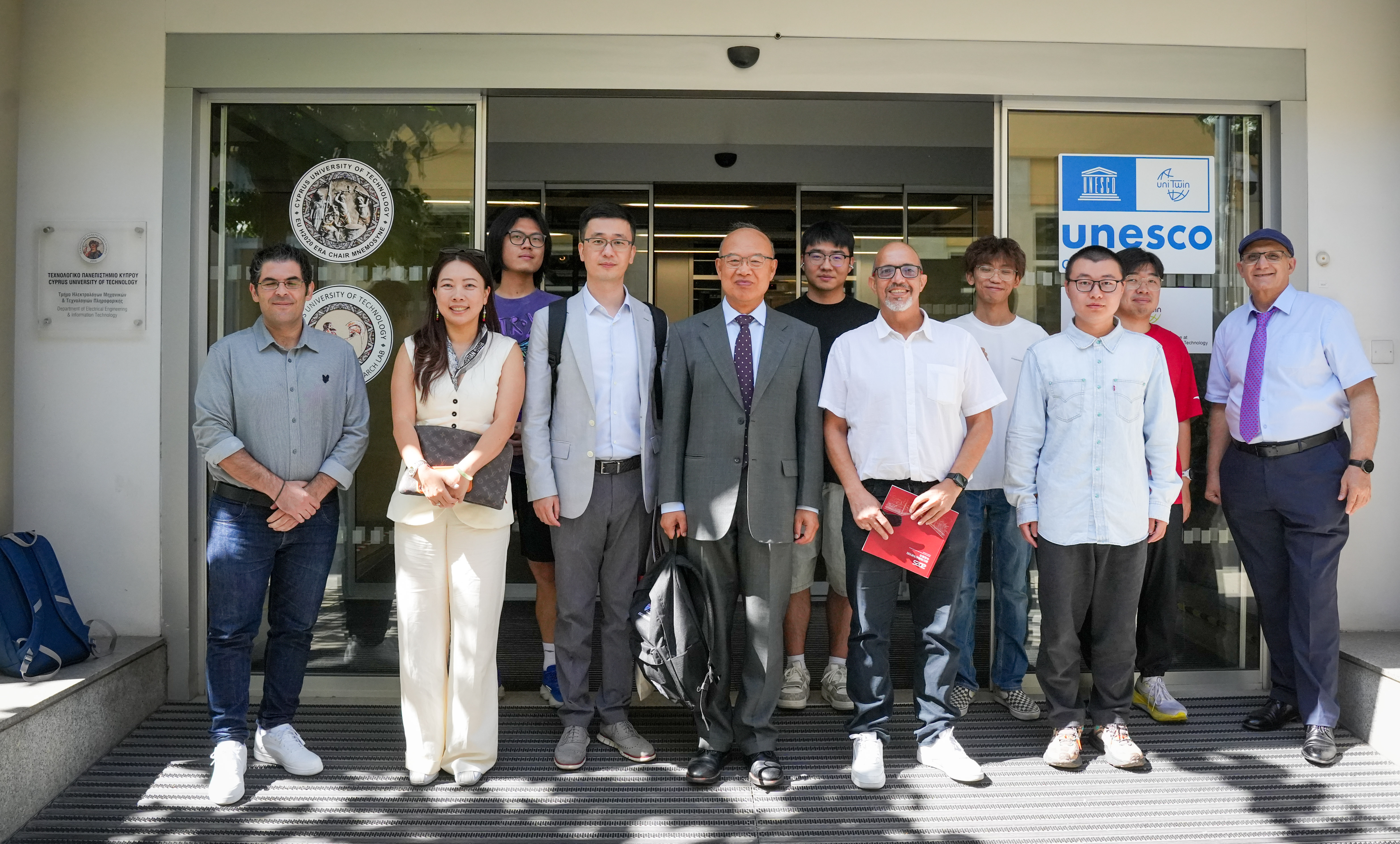
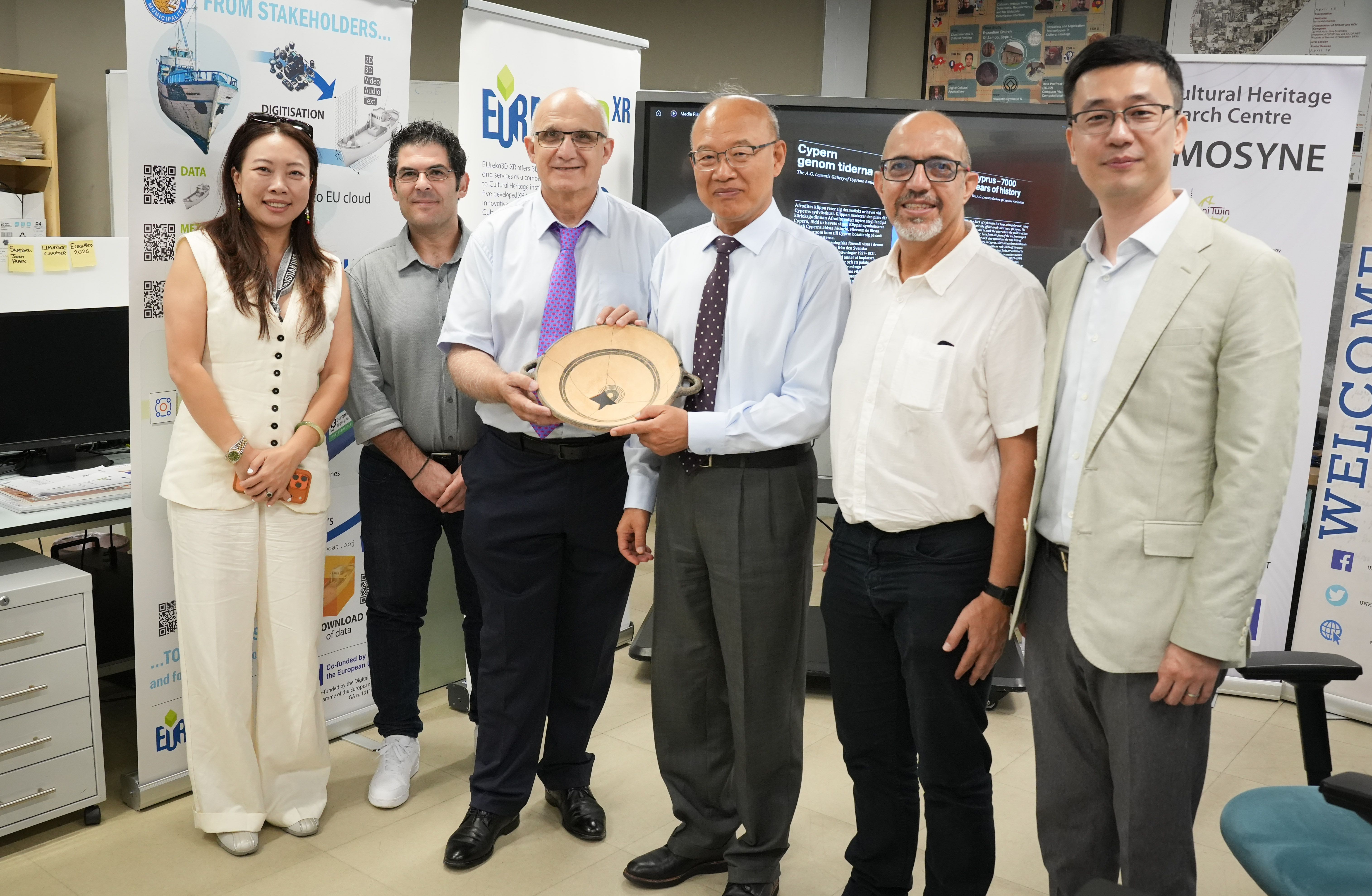
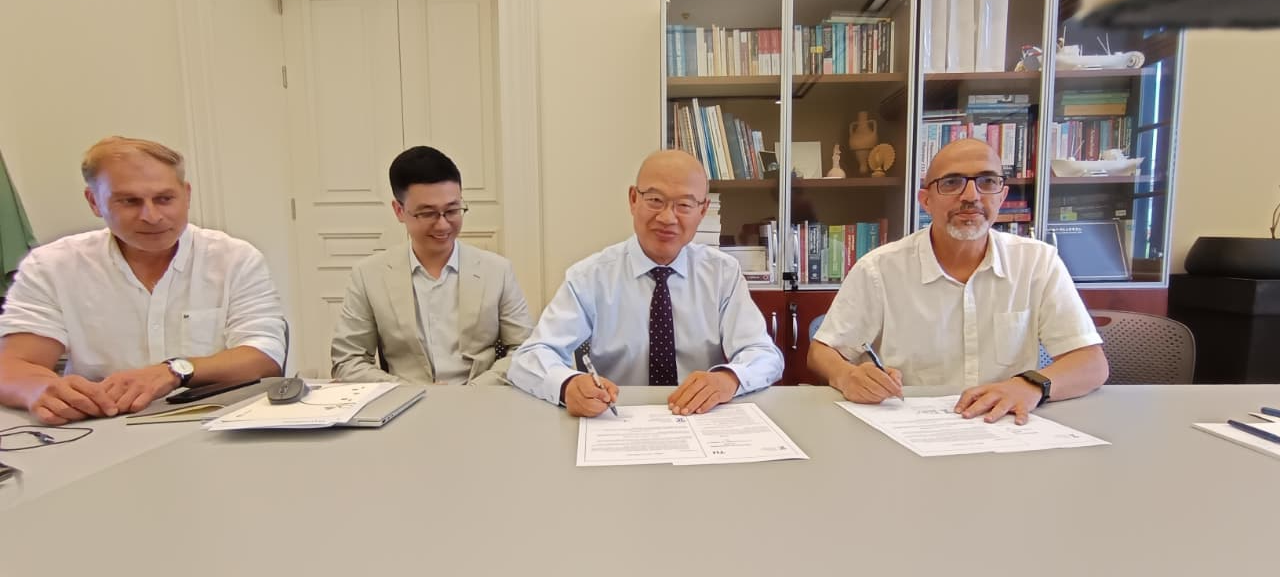
The visit to Cyprus University of Technology (CUT), in Limassol, Cyprus last week (17-19/9/2026) and in particular to the UNESCO Chair and Research Center MNEMOSYNE affirmed the strong complementarity of our institutional strengths and our shared commitment to developing long-term academic and research cooperation in the field of cultural heritage. The recently signed Memorandum of Understanding (MoU) provides an important framework for strengthening academic, scientific, and technological collaboration between the two institutions. CUT was represented by Prof. Nicolaos Tsapatsulis Vice Rector for Academic Affairs and Prof. Vangelis Vice Rector of Finances as well with Dr. Athos Agapiou, Acting Director of the Research center MNEMOSYNE as well as the Director of the UNESCO Chair on Digital Cultural Heritage, Dr. Marinos Ioannides.
Our discussions identified opportunities to strengthen cooperation between the two institutions through joint research, education and training, staff and student exchanges, and the sharing of expertise and research resources. Areas of shared interest include cultural heritage research and conservation, digital cultural heritage, and related international standards. We also explored the potential establishment of research workstations and, in the longer term, an international joint laboratory to support sustained interdisciplinary collaboration and innovation.
Particular emphasis was placed on the opportunity to combine the Partner Institute’s expertise in ancient materials, ceramics, archaeology, conservation, and related fields with CUT’s internationally recognised expertise in Digital Cultural Heritage, including its EU ERA Chair in Digital Cultural Heritage and UNESCO Chair on Digital Cultural Heritage, as well as its specialised research infrastructure within the Research Center MNEMOSYNE and wide international network.
Within the framework of this cooperation, CUT will provide, to the extent possible, scientific expertise, technical know-how, advice, training, and support in the broad domain of Digital Cultural Heritage, covering education, research, innovation, technology development, capacity building, and policy. CUT will actively seek to support the Partner Institute in addressing challenges related to the digital documentation, interpretation, preservation, monitoring, management, and long-term accessibility of digital cultural heritage.
Particular attention will be given to the exchange of knowledge concerning the different types of ancient materials, artefacts, monuments, and archaeological remains and their specific physical, material, structural, and conservation conditions, with the objective of identifying and applying appropriate methodologies for their accurate, precise, scientifically validated, and holistic digital documentation. This cooperation may encompass advanced 3D digitisation, photogrammetry, laser scanning, remote sensing, digital reconstruction, artificial intelligence, Digital Twins, MemoryTwin methodologies, HBIM/HHBIM, databases and knowledge graphs, as well as other emerging technologies relevant to cultural heritage.
The two institutions will also explore opportunities for sharing expertise, research infrastructure, datasets, scientific resources, methodologies, and best practices, while developing joint research and training activities. These activities may include joint workshops, seminars, conferences (such as the upcoming www.EuroMed2026.eu) courses, staff and student exchanges, scientific missions, joint publications, research proposals, and participation in European and international research and innovation programmes.
Through this collaboration, CUT will endeavour to make its available know-how, expertise, research experience, technological infrastructure, and international networks accessible to the Partner Institute, wherever appropriate and feasible. At the same time, the Partner Institute’s specialised knowledge of ancient materials, ceramics, conservation, archaeological contexts, and associated cultural heritage will provide an important complementary dimension to CUT’s digital expertise.
The overall objective is to establish a sustainable and mutually beneficial framework for interdisciplinary cooperation, bringing together archaeology, conservation, materials science, digital technologies, digital cultural heritage management, education, research, innovation, and policy. Such cooperation will contribute not only to the development of new scientific and technological solutions, but also to a deeper understanding, documentation, preservation, and transmission of cultural heritage and the memory associated with it for future generations.
We greatly appreciated the openness, and constructive spirit of our guests at our University and we are looking forward to transforming these shared interests and complementary strengths into concrete joint projects, research activities, educational initiatives, staff and students exchanges, and long-term institutional cooperation, benefiting both institutions and contributing to the international understanding, preservation, and sustainable use of cultural heritage.
CUT and Tsientang University Strengthen Cooperation in Digital Cultural Heritage
Tsientang University is a privately funded, nonprofit research university being developed in Hangzhou, China, through the philanthropic commitment of entrepreneur Zhong Shanshan. The Tsientang Institute for Advanced Study (TIAS) serves as its preparatory body and existing academic base. Bringing together the physical and life sciences, artificial intelligence and informatics, and the humanities and social sciences, the university aims to expand the frontiers of knowledge and advance technological innovation through interdisciplinary research and education. The Institute has been represented by its President Prof. Enge Wang (former President of the University of Peking and Vice-Chair of the Chinese Academy of Science together with Dr. Zilong Zheng Head of the International Affairs.
The visit to Cyprus University of Technology (CUT), in Limassol, Cyprus last week (17-19/9/2026) and in particular to the UNESCO Chair and Research Center MNEMOSYNE affirmed the strong complementarity of our institutional strengths and our shared commitment to developing long-term academic and research cooperation in the field of cultural heritage. The recently signed Memorandum of Understanding (MoU) provides an important framework for strengthening academic, scientific, and technological collaboration between the two institutions. CUT was represented by Prof. Nicolaos Tsapatsulis Vice Rector for Academic Affairs and Prof. Vangelis Vice Rector of Finances as well with Dr. Athos Agapiou, Acting Director of the Research center MNEMOSYNE as well as the Director of the UNESCO Chair on Digital Cultural Heritage, Dr. Marinos Ioannides.
Our discussions identified opportunities to strengthen cooperation between the two institutions through joint research, education and training, staff and student exchanges, and the sharing of expertise and research resources. Areas of shared interest include cultural heritage research and conservation, digital cultural heritage, and related international standards. We also explored the potential establishment of research workstations and, in the longer term, an international joint laboratory to support sustained interdisciplinary collaboration and innovation.
Particular emphasis was placed on the opportunity to combine the Partner Institute’s expertise in ancient materials, ceramics, archaeology, conservation, and related fields with CUT’s internationally recognised expertise in Digital Cultural Heritage, including its EU ERA Chair in Digital Cultural Heritage and UNESCO Chair on Digital Cultural Heritage, as well as its specialised research infrastructure within the Research Center MNEMOSYNE and wide international network.
Within the framework of this cooperation, CUT will provide, to the extent possible, scientific expertise, technical know-how, advice, training, and support in the broad domain of Digital Cultural Heritage, covering education, research, innovation, technology development, capacity building, and policy. CUT will actively seek to support the Partner Institute in addressing challenges related to the digital documentation, interpretation, preservation, monitoring, management, and long-term accessibility of digital cultural heritage.
Particular attention will be given to the exchange of knowledge concerning the different types of ancient materials, artefacts, monuments, and archaeological remains and their specific physical, material, structural, and conservation conditions, with the objective of identifying and applying appropriate methodologies for their accurate, precise, scientifically validated, and holistic digital documentation. This cooperation may encompass advanced 3D digitisation, photogrammetry, laser scanning, remote sensing, digital reconstruction, artificial intelligence, Digital Twins, MemoryTwin methodologies, HBIM/HHBIM, databases and knowledge graphs, as well as other emerging technologies relevant to cultural heritage.
The two institutions will also explore opportunities for sharing expertise, research infrastructure, datasets, scientific resources, methodologies, and best practices, while developing joint research and training activities. These activities may include joint workshops, seminars, conferences (such as the upcoming www.EuroMed2026.eu) courses, staff and student exchanges, scientific missions, joint publications, research proposals, and participation in European and international research and innovation programmes.
Through this collaboration, CUT will endeavour to make its available know-how, expertise, research experience, technological infrastructure, and international networks accessible to the Partner Institute, wherever appropriate and feasible. At the same time, the Partner Institute’s specialised knowledge of ancient materials, ceramics, conservation, archaeological contexts, and associated cultural heritage will provide an important complementary dimension to CUT’s digital expertise.
The overall objective is to establish a sustainable and mutually beneficial framework for interdisciplinary cooperation, bringing together archaeology, conservation, materials science, digital technologies, digital cultural heritage management, education, research, innovation, and policy. Such cooperation will contribute not only to the development of new scientific and technological solutions, but also to a deeper understanding, documentation, preservation, and transmission of cultural heritage and the memory associated with it for future generations.
We greatly appreciated the openness, and constructive spirit of our guests at our University and we are looking forward to transforming these shared interests and complementary strengths into concrete joint projects, research activities, educational initiatives, staff and students exchanges, and long-term institutional cooperation, benefiting both institutions and contributing to the international understanding, preservation, and sustainable use of cultural heritage.